DOWNTIME SOLUTIONING
Identifying System Failures and Restoring Confidence in Clinical Operations
Overview
A critical clinical system experienced repeated downtime incidents that disrupted workflows across multiple departments. Each outage forced clinicians into manual fallback processes, slowed patient throughput, and eroded trust in the system’s reliability.
I led a cross‑functional root cause analysis (RCA) to identify failure points, quantify operational impact, and drive a set of corrective actions that strengthened system stability and improved clinical readiness for future incidents.
The Problem
Downtime incidents were becoming more frequent and more disruptive. Clinicians reported:
Lost or delayed access to essential systems
Confusion about when to switch to downtime procedures
Documentation backlogs during system restoration
Communication gaps between technical teams and frontline staff
Initial investigations focused on individual outages, but patterns suggested deeper systemic issues. Leadership needed a clear understanding of why the failures were occurring and what must change to prevent them.
Client
HCA
Service
DOWNTIME ROOT CAUSE ANALYSIS
Industry
Hospitals
Year
2023


Process
I partnered with IT infrastructure, application support, clinical operations, and governance teams to reconstruct the timeline and impact of each incident. The analysis included:
Logs and system performance traces
Timeline reconstruction across departments
Failure mode categorization
Workflow observation during active downtimes
Interviews with clinical staff impacted by the outages
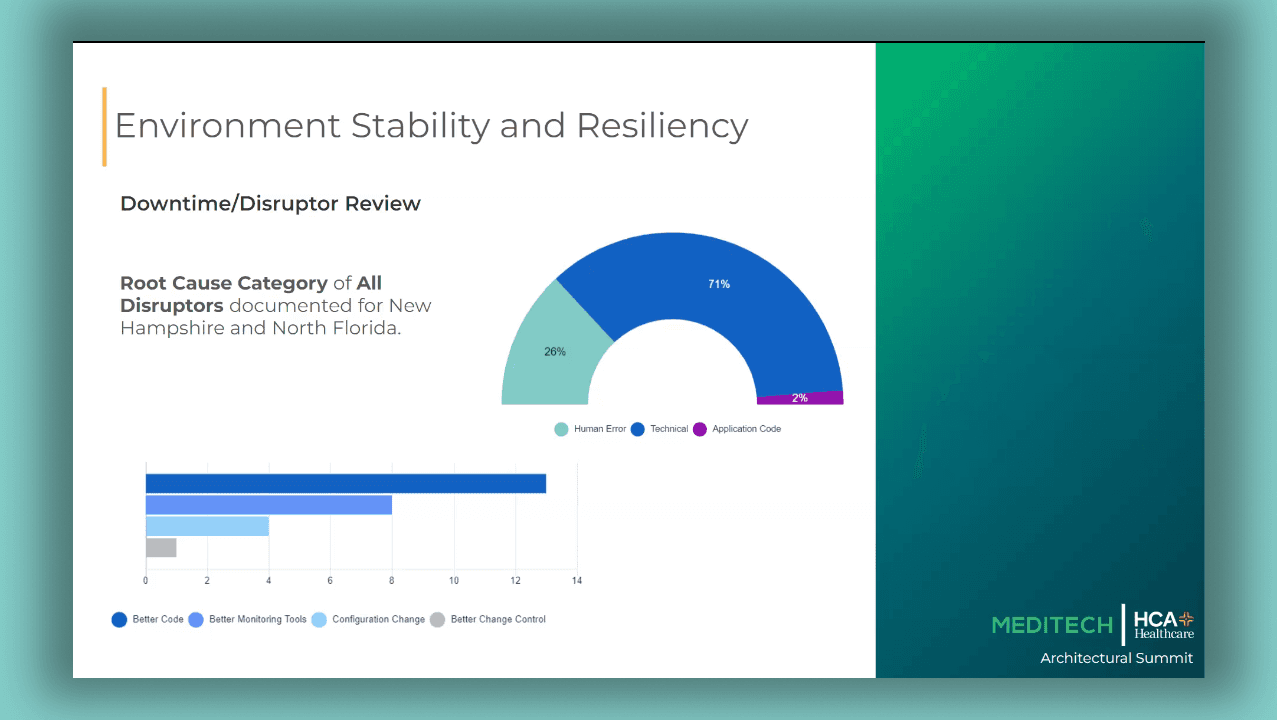
Through this work, several root causes emerged:
A single failure point within the storage environment
Monitoring gaps that delayed detection
Unclear escalation pathways during incident response
Inconsistent downtime readiness across clinical teams
These findings formed the basis for targeted operational and technical reforms.
The Solution
We implemented a set of corrective actions designed to improve uptime, strengthen early detection, and reduce operational disruption:
Infrastructure remediation to eliminate the single point of failure
Enhanced monitoring and alerting to detect performance degradation earlier
Standardized escalation procedures to improve response speed and coordination
Refined downtime workflows so departments could transition smoothly during an outage
Training and communication updates to increase clarity across clinical and technical teams
By addressing both the technical and human factors behind the outages, we created a more resilient ecosystem.
Impact
The improvements delivered measurable gains in reliability and operational readiness:
Reduction in unplanned downtime after infrastructure fixes
Faster incident detection through refined monitoring
Higher clinician confidence in both the system and downtime protocols
Streamlined recovery processes that reduced backlog after each incident
These changes improved continuity of care and reduced the operational burden on clinical teams.
What I Learned
Effective root cause analysis requires looking beyond the immediate failure. The most important lesson:
Stability comes from strengthening both the technology and the workflows that surround it.
By pairing technical fixes with clear communication, better training, and consistent escalation pathways, organizations can reduce the operational cost of outages and restore trust in their systems.